
The lockdown that crippled the entire logistics, delivery and supply chain network to near zero, was enough to deal a body blow to India's fastest growing unicorn whose very business model saw a severe disruption, like several other firms and sectors.

The 12th edition of EORS will be held from June 19-22. There will be a dedicated central virtual war-room for tactical problem solving across all phases of the event. Shoppers across the country will have access to over 700,000 styles from over 3,000 fashion and lifestyle brands. Myntra is expecting 3 million people to shop from the safety of their homes.

As several premium hotels such as ITC, Taj and Oberoi reopen after the lockdown in cities such as Bengaluru, Kolkata and Hyderabad, many changes have been made for the safety of guests and staff including temporary closure of spas, bars, gyms, and swimming pools.

The coronavirus pandemic has changed how businesses look at payments. Earlier, fintech companies said when they were talking to merchants, they were not interested in digitisation.

Backed by China's Tencent and Prosus NV, Swiggy has around 8,000 employees.
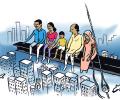
Developers are cautious about the timing of launches in the near term, given the relative uncertainty in demand pick-up and logistical challenges during the lockdown. However, affordable housing projects slated for the first quarter (Q1) of 2020-21 (FY21) may get launched this quarter itself.

Experts say that the lockdown and its aftermath will further quicken the consolidation in the real estate sector, which has been taking place since 2012, with more small players going out of the business and bigger, branded players dominating the market.

The quarter also saw exits worth $1.9 billion across 37 deals, 59 per cent higher YoY. This was driven by one of India's largest PE-backed IPO exit, the $1-billion partial exit by Carlyle in the SBI Cards IPO.

Most firms operating in the space claim that they have seen at least a two-fold rise in orders as compared to other times.

With the lockdown in force, live online teaching has become the order of the day, report Peerzada Abrar and Sai Ishwar.

What is aggravating the situation is that e-commerce firms are facing huge shortage of delivery personnel. They have not been able to bring back their staff to work, despite offering higher pay and Covid-related insurance packages.

The companies have asked for digital curfew passes as e-retailers feel if more lockdowns are ordered after April 14, it is extremely difficult and time-consuming process to acquire the passes from local authorities.

What will happen to the job placement and summer internship plans of India's management and IIT students? Many campuses are stepping in to help students hang on to their placements, in spite of the lockdown.

Over the past week, several unusual partnerships among start-ups, traditional businesses and hospitals have been announced, and several more are likely to materialise soon. The trend could see increased importance of gig workers, who are taking considerable risk to deliver goods to people in the time of a pandemic.

For now, Bounce, Shuttl, Fab Hotels, Instamojo, Zomato, Curefit, and HealthifyMe, among others, are going for salary deductions. Most of the consumer internet start-ups, besides those who are in the grocery delivery, education tech, and video conferencing business, would ultimately lay-off people and cut back salaries.

While some researchers are developing prototypes for ventilators to overcome their shortage, others have teamed up to develop testing kits.

Thanks to technological support provided by BlinkIN, a Bengaluru-based intelligent visual-assistance company, engineers in Wuhan were able to remotely install air ventilation systems in two hospitals in Wuhan, the epicentre of the coronavirus pandemic, reports Peerzada Abrar.
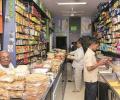
'90 per cent of the food and grocery business is still with the kiranas.' 'If kiranas are not allowed to operate, it becomes a serious issue.'

However, many of these firms were facing an uphill task of convincing the people on the ground to return to work, as many are apprehensive of their safety.

'We are going to be overwhelmed by the need for hospital beds. There are simply not enough beds in government hospitals.' 'We will need a large number of medical professionals and without the private sector's involvement, the government won't be able to expand capacity.'
 © 2026 Rediff.com - Advertise with us - Disclaimer - Privacy Policy - Sitemap - Feedback - About us - Terms of use - Grievances